A status report is a comprehensive technical document that compiles and analyzes the best available information on a wildlife species' status in Canada.
COSEWIC’s next scheduled wildlife species assessment meeting will be held in November 2025.
About COSEWIC
COSEWIC assesses the status of wild species, subspecies, varieties, or other important units of biological diversity, considered to be at risk in Canada. To do so, COSEWIC uses scientific, Aboriginal traditional and community knowledge provided by experts from governments, academia and other organizations. Summaries of assessments are currently available to the public on the COSEWIC website and will be submitted to the Federal Minister of the Environment and Climate Change in fall 2024 for listing consideration under the Species at Risk Act (SARA). At that time, the status reports and status appraisal summaries will be publicly available on the Species at Risk Public Registry.
At its most recent meeting, COSEWIC assessed 12 wildlife species in various COSEWIC risk categories, including 5 Endangered, 2 Threatened, and 3 Special Concern, and 1 Extirpated (i.e. no longer found in the wild in Canada). In addition to these wildlife species that are in COSEWIC risk categories, COSEWIC assessed 1 as Not at Risk.
COSEWIC comprises members from each provincial and territorial government wildlife agency, four federal entities (Canadian Wildlife Service, Parks Canada Agency, Fisheries and Oceans Canada, and the Canadian Museum of Nature), four Non-government Science Members, Co-chairs of the Species Specialist and the Aboriginal Traditional Knowledge Subcommittees, and two early career scientists.
Definition of COSEWIC terms and status categories:
Wildlife Species: A species, subspecies, variety, or geographically or genetically distinct population of animal, plant or other organism, other than a bacterium or virus, that is wild by nature and is either native to Canada or has extended its range into Canada without human intervention and has been present in Canada for at least 50 years. Extinct (X): A wildlife species that no longer exists. Extirpated (XT): A wildlife species that no longer exists in the wild in Canada, but exists elsewhere. Endangered (E): A wildlife species facing imminent extirpation or extinction. Threatened (T): A wildlife species that is likely to become Endangered if nothing is done to reverse the factors leading to its extirpation or extinction. Special Concern (SC): A wildlife species that may become Threatened or Endangered because of a combination of biological characteristics and identified threats. Not at Risk (NAR): A wildlife species that has been evaluated and found to be not at risk of extinction given the current circumstances. Data Deficient (DD): A category that applies when the available information is insufficient (a) to resolve a wildlife species’ eligibility for assessment or (b) to permit an assessment of the wildlife species’ risk of extinction. Species at Risk: A wildlife species that has been assessed as Extirpated, Endangered, Threatened or Special Concern.
Dr. David Lee Chair, COSEWIC Telephone: 514-366-9574 This email address is being protected from spambots. You need JavaScript enabled to view it.
For general inquiries: COSEWIC Secretariat Canadian Wildlife Service Environment and Climate Change Canada 351 St. Joseph Blvd, 14th floor Gatineau QC K1A 0H3 This email address is being protected from spambots. You need JavaScript enabled to view it. www.cosewic.ca
For inquiries on amphibians and reptiles (Massasauga, Snapping Turtle): Dr. Sara Ashpole St. Lawrence University Telephone: 315-229-5890 This email address is being protected from spambots. You need JavaScript enabled to view it.
For inquiries on arthropods (Macropis Cuckoo Bee): Jennifer M. Heron This email address is being protected from spambots. You need JavaScript enabled to view it.
For inquiries on birds (Snowy Owl): Dr. Louise Blight Procellaria Research & Consulting and University of Victoria This email address is being protected from spambots. You need JavaScript enabled to view it.
For inquiries on echinodermata (ad hoc): (Sunflower Sea Star): Dr. Arne Mooers Simon Fraser University Telephone (1): 778-782-3979 Telephone (2): 604-358-2313 This email address is being protected from spambots. You need JavaScript enabled to view it.
For inquiries on freshwater fishes (Bull Trout, Pugnose Minnow): Dr. Margaret F. Docker University of Manitoba Telephone : 204-474-8831 This email address is being protected from spambots. You need JavaScript enabled to view it.
For inquiries on marine fishes (Greenland Shark): Dr. Bruce Leaman Telephone: 250-510-3625 This email address is being protected from spambots. You need JavaScript enabled to view it.
For inquiries on mosses and lichens (Cupped Fringe Lichen, Roell's Brotherella Moss): Dr. André Arsenault Natural Resources Canada Telephone: 709-638-2365 This email address is being protected from spambots. You need JavaScript enabled to view it.
For inquiries on molluscs (Big-tooth Whitelip): Dr. Dwayne Lepitzki Telephone : 403-762-0864 This email address is being protected from spambots. You need JavaScript enabled to view it.
For inquiries on Aboriginal Traditional Knowledge: Nathan Cardinal This email address is being protected from spambots. You need JavaScript enabled to view it.
(Wendake, Québec, May 15, 2025). Many Canadians have fond childhood memories of nature – seeing an owl at dusk, tidepooling for starfish, gazing out to sea hoping to spot a shark, or playing on a moss-carpeted log. This week, the expert Committee on the Status of Endangered Wildlife In Canada (COSEWIC) met near Québec City to consider the conservation status of 14 wildlife species, including some memory makers.
Québec’s provincial bird, the Snowy Owl, was assessed as Threatened. This iconic species nests throughout the Arctic and winters further south, and is culturally significant to many Indigenous nations. And, while it can still be found in every province and territory in the country, it is declining as a result of some of the impacts of climate change and other threats.
According to Louise Blight, co-chair of the subcommittee overseeing birds, "Not only does this species nest in a region with one of the fastest-changing climates on the planet, but when it heads south for the winter it faces additional threats - collisions, electrocution, rodenticide poisoning, and diseases like avian influenza."
The extraordinary Greenland Shark was assessed for the first time, and found to be Special Concern. This large shark frequents the cold, clear waters of Canada’s Arctic and Atlantic Oceans. Greenland Shark is considered the longest-living vertebrate species in the world, taking a record-breaking 150 years to reach maturity and then continuing to breed for at least another century. This species is affected by fisheries bycatch and the impacts of an accelerated rate of climate change in Arctic regions. Its extremely long generation time means populations rebound very slowly if they decline.
Bruce Leaman, co-chair of the subcommittee that oversees marine fish, highlighted the special biology of this species: "The childhood of one individual shark spans the careers of five fishery biologists. However, we do have to keep learning about them, because the species is likely very sensitive to incremental losses, and threats are not declining."
The Sunflower Sea Star is the world's largest starfish - it has up to 24 arms and is able to grow to over a metre in diameter. This Pacific Coast keystone species was assessed as Endangered. This follows a mass mortality event across its entire Alaska-to-Mexico range caused by the mysterious Sea Star Wasting Disease associated with “the blob”, the ocean heat wave of 2014-2015. Though highly mobile, Sunflower Sea Stars cannot crawl away from this scourge. Conservative estimates put their decline at over 75%. Some areas of refuge may still exist in the colder waters of northern fjords, but only time will tell.
Isabelle Côté, Professor of Marine Ecology and Conservation at Simon Fraser University, highlighted the situation: "It is hard to overstate the ecological impact of this loss on our marine ecosystems."
A moss and a lichen were also assessed, both as Endangered. Part of the lush green backdrop of BC’s forests in the Fraser Valley, the endemic Roell’s Brotherella Moss is threatened both by increases in torrential floods and by severe droughts. The Cupped Fringe Lichen grows on the bark of broadleaf trees in southern Ontario, Quebec and New Brunswick. As the invasive Emerald Ash Borer kills many of the trees it lives on, this large and attractive lichen is becoming a rare sight.
The nine other wildlife species brought forward include a large land snail, six freshwater fish species, a bee that lays its eggs in the nests of other bees, and one of only three rattlesnake species that occur in Canada.
COSEWIC Chair David Lee summed up the results: "It is disheartening when we learn that iconic species are endangered in Canada. However, identifying threats is critical to ensure we continue to respect the stewardship of our ancestors and to help make memories for our grandchildren."
Next meeting
COSEWIC’s next wildlife species assessment meeting is scheduled for November 2025.
About COSEWIC
COSEWIC assesses the status of important units of biological diversity considered to be at risk in Canada. To do so, COSEWIC uses scientific, Aboriginal traditional and community knowledge provided by experts from governments, academia and other organizations. Summaries of assessments are currently available to the public on the COSEWIC website and will be submitted to the Federal Minister of the Environment and Climate Change in fall 2025 for listing consideration under the Species at Risk Act (SARA). At that time, the status reports will be publicly available on the Species at Risk Public Registry.
COSEWIC comprises members from each provincial and territorial government wildlife agency, four federal entities (Canadian Wildlife Service, Parks Canada Agency, Fisheries and Oceans Canada, and the Canadian Museum of Nature), four Non-government Science Members, Co-chairs of the Species Specialist and the Aboriginal Traditional Knowledge Subcommittees, and two early career scientists.
At its most recent meeting, COSEWIC assessed 14 wildlife species in various COSEWIC risk categories, including 5 Endangered, 3 Threatened, and 4 Special Concern. In addition to these wildlife species that are in COSEWIC risk categories, COSEWIC assessed 2 as Data Deficient.
Definition of COSEWIC terms and status categories:
Wildlife Species: A species, subspecies, variety, or geographically or genetically distinct population of animal, plant or other organism, other than a bacterium or virus, that is wild by nature and is either native to Canada or has extended its range into Canada without human intervention and has been present in Canada for at least 50 years. Extinct (X): A wildlife species that no longer exists. Extirpated (XT): A wildlife species that no longer exists in the wild in Canada, but exists elsewhere. Endangered (E): A wildlife species facing imminent extirpation or extinction. Threatened (T): A wildlife species that is likely to become Endangered if nothing is done to reverse the factors leading to its extirpation or extinction. Special Concern (SC): A wildlife species that may become Threatened or Endangered because of a combination of biological characteristics and identified threats. Not at Risk (NAR): A wildlife species that has been evaluated and found to be not at risk of extinction given the current circumstances. Data Deficient (DD): A category that applies when the available information is insufficient (a) to resolve a wildlife species’ eligibility for assessment or (b) to permit an assessment of the wildlife species’ risk of extinction. Species at Risk: A wildlife species that has been assessed as Extirpated, Endangered, Threatened or Special Concern.
Dr. David Lee Chair, COSEWIC Telephone: 514-366-9574 This email address is being protected from spambots. You need JavaScript enabled to view it.
For general inquiries: COSEWIC Secretariat Canadian Wildlife Service Environment and Climate Change Canada 351 St. Joseph Blvd Gatineau QC K1A 0H3 This email address is being protected from spambots. You need JavaScript enabled to view it. www.cosewic.ca
For inquiries on amphibians & reptiles (Eastern Massasauga, Snapping Turtle): Dr. Sara Ashpole St. Lawrence University Telephone: 315-229-5890 This email address is being protected from spambots. You need JavaScript enabled to view it.
For inquiries on arthropods (Macropis Cuckoo Bee): Jennifer M. Heron This email address is being protected from spambots. You need JavaScript enabled to view it.
For inquiries on birds (Snowy Owl): Dr. Louise Blight Procellaria Research & Consulting and University of Victoria This email address is being protected from spambots. You need JavaScript enabled to view it.
For inquiries on echinodermata (ad hoc): (Sunflower Sea Star): Dr. Arne Mooers Simon Fraser University Telephone (1): 778-782-3979 Telephone (2): 604-358-2313 This email address is being protected from spambots. You need JavaScript enabled to view it.
For inquiries on freshwater fishes (Bull Trout, Pugnose Minnow): Dr. Margaret F. Docker University of Manitoba Telephone : 204-474-8831 This email address is being protected from spambots. You need JavaScript enabled to view it.
For inquiries on marine fishes (Greenland Shark): Dr. Bruce Leaman Telephone: 250-510-3625 This email address is being protected from spambots. You need JavaScript enabled to view it.
For inquiries on mosses and lichens (Cupped Fringe Lichen, Roell's Brotherella Moss): Dr. André Arsenault Natural Resources Canada Telephone: 709-638-2365 This email address is being protected from spambots. You need JavaScript enabled to view it.
For inquiries on molluscs (Big-tooth Whitelip): Dr. Dwayne Lepitzki Telephone : 403-762-0864 This email address is being protected from spambots. You need JavaScript enabled to view it.
For inquiries on Aboriginal Traditional Knowledge: Roger Gallant This email address is being protected from spambots. You need JavaScript enabled to view it.
The Committee on the Status of Endangered Wildlife in Canada (COSEWIC) provides independent advice to the federal government. Members are experts in wildlife biology and meet twice a year to consider wildlife species that may need legal protection because they are threatened with extinction from Canada. COSEWIC will review the status of 36 Canadian wildlife species at their December meeting. The list includes the western population of Grizzly Bear and 19 populations of Atlantic Salmon, as well as the widespread American Badger, five small moths found only on Sable Island off the coast of Nova Scotia, and an elusive vascular plant rediscovered in Ontario.
The meeting will be held December 1 to 5, 2025, in downtown Ottawa on the traditional unceded territory of the Anishinaabe Algonquin People.
Following the meeting, a press release summarizing the results of the discussions will be issued; highlighting ongoing Canadian conservation challenges and successful conservation actions.
For more information, please see the COSEWIC website.
David S. Lee (he/him/il)
Chair, Committee on the Status of Endangered Wildlife in Canada (COSEWIC) @cosewic
(Ottawa, December 5, 2024). Canada’s list of imperiled wildlife species is getting longer. This past week, the Committee on the Status of Endangered Wildlife in Canada (COSEWIC) considered five species for the first time, and all were assessed as at risk of being lost from Canada. These new assessments bring the Canadian list of at-risk species to 860.
Four of these new species were assessed as Endangered – at imminent risk of being lost from Canada. These include a population of a northern shorebird, an extremely rare peat moss, a rush, and the Valley Grasshopper. The grasshopper is limited to a small area in the south of the Okanagan Valley in British Columbia, the hottest and driest region in the country and an insect biodiversity hotspot.
“The south Okanagan Valley is a goldmine for insects, with new species found every year,” noted Jennifer Heron, Co-chair of the Arthropods Species Specialist Subcommittee. “We came across the Valley Grasshopper there for the first time in 2010. This little grasshopper’s habitat is threatened by the potential rapid expansion of housing development.”
The Short-fruited Rush was also considered for the first time and assessed as Endangered. This plant is now found only in Windsor, Ontario. The Ojibway Prairie Complex that is home to the largest remaining population is slated to become one of Canada’s new National Urban Parks.
In addition to assessing new species, COSEWIC is also tasked with reconsidering previously identified at-risk species to weigh new information and ongoing recovery efforts.
Of the seven species reassessed by the committee, three were moved to a lower at-risk category. Increases in known range and numbers largely reflect increased effort to locate the species.
“These changes highlight the importance of community science, and of folks getting involved in looking for enigmatic species,” said Dwayne Lepitzki, Co-chair of the Molluscs Species Specialist Subcommittee.
For example, increased search effort has shown that the situation may not be as dire as was previously thought for a small freshwater mussel, the Lilliput in southern Ontario.
“This mussel isn’t out of the woods yet and still has to contend with high pollution levels from cities and farms. But it does occur more widely than we thought, which we only discovered because people went looking for it” added Lepitzki. The status of the Lilliput mussel improved from Endangered to Special Concern.
Several species have maintained the same extinction risk, including two populations of the Northern Bottlenose Whale. These whales live in the North Atlantic, where they spend extensive time at depths of up to 1500m. Although both populations may be recovering slowly from whaling in the past, active threats remain, including high levels of underwater noise and entanglement in fishing gear. With an estimated population size of fewer than 100 adults, the Endangered Scotian Shelf population of Northern Bottlenose Whale remains of particular concern.
With an ever-increasing number of species at risk of extinction and limited resources to assess them, COSEWIC finds itself stretched.
"Our assessments rely on the efforts of many dedicated people across the country,” said David Lee, Chair of the committee. “Given the magnitude of the biodiversity crisis, we need all hands on deck to identify, assess and conserve species at risk of extinction in Canada".
Next meeting
COSEWIC’s next scheduled wildlife species assessment meeting will be held in Spring 2025.
About COSEWIC
COSEWIC assesses the status of wild species, subspecies, varieties, or other important units of biological diversity, considered to be at risk in Canada. To do so, COSEWIC uses scientific, Aboriginal traditional and community knowledge provided by experts from governments, academia and other organizations. Summaries of assessments are currently available to the public on the COSEWIC website and will be submitted to the Federal Minister of the Environment and Climate Change in fall 2025 for listing consideration under the Species at Risk Act (SARA). At that time, the status reports and status appraisal summaries will be publicly available on the Species at Risk Public Registry.
At its most recent meeting, COSEWIC assessed 12 wildlife species in various COSEWIC risk categories, including 5 Endangered, 4 Threatened, and 3 Special Concern.
COSEWIC comprises members from each provincial and territorial government wildlife agency, four federal entities (Canadian Wildlife Service, Parks Canada Agency, Fisheries and Oceans Canada, and the Canadian Museum of Nature), four Non-government Science Members, Co-chairs of the Species Specialist and the Aboriginal Traditional Knowledge Subcommittees, and two early career scientists.
Definition of COSEWIC terms and status categories:
Wildlife Species: A species, subspecies, variety, or geographically or genetically distinct population of animal, plant or other organism, other than a bacterium or virus, that is wild by nature and is either native to Canada or has extended its range into Canada without human intervention and has been present in Canada for at least 50 years. Extinct (X): A wildlife species that no longer exists. Extirpated (XT): A wildlife species that no longer exists in the wild in Canada, but exists elsewhere. Endangered (E): A wildlife species facing imminent extirpation or extinction. Threatened (T): A wildlife species that is likely to become Endangered if nothing is done to reverse the factors leading to its extirpation or extinction. Special Concern (SC): A wildlife species that may become Threatened or Endangered because of a combination of biological characteristics and identified threats. Not at Risk (NAR): A wildlife species that has been evaluated and found to be not at risk of extinction given the current circumstances. Data Deficient (DD): A category that applies when the available information is insufficient (a) to resolve a wildlife species’ eligibility for assessment or (b) to permit an assessment of the wildlife species’ risk of extinction. Species at Risk: A wildlife species that has been assessed as Extirpated, Endangered, Threatened or Special Concern.
Dr. David Lee Chair, COSEWIC Telephone: 514-366-9574 This email address is being protected from spambots. You need JavaScript enabled to view it.
For general inquiries: COSEWIC Secretariat Canadian Wildlife Service Environment and Climate Change Canada 351 St. Joseph Blvd, 14th floor Gatineau QC K1A 0H3 This email address is being protected from spambots. You need JavaScript enabled to view it. www.cosewic.ca
For inquiries on amphibians and reptiles (Butler's Gartersnake): Dr. Pamela Rutherford Brandon University Telephone: 204-727-9607 This email address is being protected from spambots. You need JavaScript enabled to view it.
For inquiries on arthropods (Valley Grasshopper): John Klymko Atlantic Canada Conservation Data Centre Telephone: 506-364-2660 This email address is being protected from spambots. You need JavaScript enabled to view it.
For inquiries on birds (Least Bittern, Lewis's Woodpecker, Short-billed Dowitcher): Dr. Louise Blight Procellaria Research & Consulting and University of Victoria Telephone: 778-677-8495 This email address is being protected from spambots. You need JavaScript enabled to view it.
For inquiries on marine mammals (Northern Bottlenose Whale): Dr. John K.B. Ford Scientist Emeritus Fisheries and Oceans Canada Telephone: 250-667-4698 This email address is being protected from spambots. You need JavaScript enabled to view it.
For inquiries on molluscs (Lilliput): Dr. Dwayne Lepitzki Telephone : 403-762-0864 This email address is being protected from spambots. You need JavaScript enabled to view it.
For inquiries on mosses (Circular-leaved Peat Moss): Dr. René Belland University of Alberta Telephone: 780-492-0801 This email address is being protected from spambots. You need JavaScript enabled to view it.
For inquiries on terrestrial mammals (Black-tailed Prairie Dog): Dr. Stephen D. Petersen Assiniboine Park Zoo Telephone: 204-793-4363 This email address is being protected from spambots. You need JavaScript enabled to view it.
For inquiries on vascular plants (Short-fruited Rush): Bruce Bennett Telephone : 867-689-1767 This email address is being protected from spambots. You need JavaScript enabled to view it.
For inquiries on Aboriginal Traditional Knowledge: Roger Gallant Telephone: 709-638-4343 This email address is being protected from spambots. You need JavaScript enabled to view it.
(Ottawa, December 7, 2022). As Canada welcomes the world to the COP15 Biodiversity Conference in Montreal, the latest biannual species assessments by the Committee on the Status of Endangered Wildlife in Canada (COSEWIC) show how decisions to act - or not to - can change biodiversity. Legal protection has improved the fate of some species, while declines in others were not even documented until the species had almost disappeared.
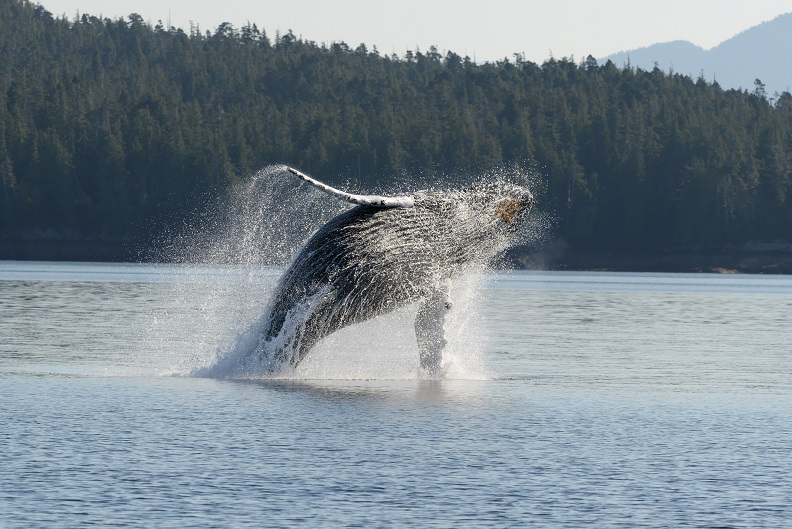
Whales are culturally important for Indigenous peoples, and beloved by all. North Pacific Humpback Whale exemplifies both conservation success and the need for continued vigilance. Commercial whaling for Humpbacks was outlawed globally in 1966. Since then, the dangerously low population of North Pacific Humpback Whale has been growing steadily. More than 4000 now spend their summers off the coast of British Columbia, although ship strikes, entanglement in fishing gear, noise disturbance and toxic spills all remain hazards.
Furthermore, according to John Ford, Co-chair of the Marine Mammals subcommittee, "Southeast Alaska, just north of the British Columbia coast, saw a troubling die-off of Humpbacks during 2014-2018, when a long period with abnormally warm water caused a scarcity of their food. Although Humpbacks are doing really well in British Columbia, they still face serious challenges." North Pacific Humpback Whale was assessed as Special Concern.
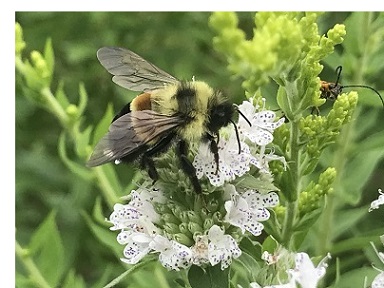
Once common, Rusty-patched Bumble Bee declined quickly in the 1990s and could not be found by the time it was designated Endangered in 2010. The initial decline – probably caused by disease spread through commercial greenhouse bumble bees – came as a surprise because few people were monitoring bees at the time. Now, Rusty-patched Bumble Bee is an ambassador for the “save-the-bees” movement, part of the huge expansion of community science nationwide. In spite of some 40 000 records of bumble bees across the species’ former range in the popular iNaturalist app, not a single Rusty-patched Bumble Bee has been reported in Canada since 2009. Though a few of these bees may remain, this massive, collective volunteer effort helped the committee to confirm that Rusty-patched Bumble Bee is Endangered.
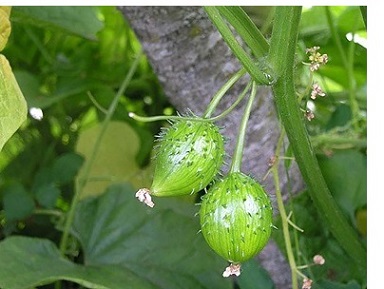
The committee also reassessed Coastal Manroot, a vine with prickly, gourd-like fruit and enormous tubers that resemble sweet potatoes. An important Indigenous medicinal plant, many parts were used to soothe sores and treat diseases. However, threats from development and introduced plants have reduced the Canadian population to fewer than 50 individuals.
Gloria Goulet, Co-chair of COSEWIC’s Aboriginal Traditional Knowledge subcommittee explains: “We consider these plants our relatives, and so both harvesting and caretaking follow long-established ethical protocols. This way of looking at the plant world makes us pause and reminds us of our collective responsibility.” Coastal Manroot was reassessed as Endangered.
As the world considers global biodiversity issues at the COP15 meeting, Canada faces its own decisions to save species here at home. “More and more people are getting involved in looking for, and looking out for, species at risk,” concluded David Lee, Chair of COSEWIC, “That’s encouraging.”
COSEWIC assessed 27 wildlife species in total, from Eastern Whip-poor-will to Leatherback Sea Turtles to Scaly Fringe Lichen.
Next meeting
COSEWIC’s next scheduled wildlife species assessment meeting will be held in April 2023.
About COSEWIC
COSEWIC assesses the status of wild species, subspecies, varieties, or other important units of biological diversity, considered to be at risk in Canada. To do so, COSEWIC uses scientific, Aboriginal traditional and community knowledge provided by experts from governments, academia and other organizations. Summaries of assessments are currently available to the public on the COSEWIC website and will be submitted to the Federal Minister of the Environment and Climate Change in fall 2023 for listing consideration under the Species at Risk Act (SARA). At that time, the status reports and status appraisal summaries will be publicly available on the Species at Risk Public Registry.
At its most recent meeting, COSEWIC assessed 27 wildlife species in various COSEWIC risk categories, including 9 Endangered, 7 Threatened, 8 Special Concern, and 3 Extirpated (i.e. no longer found in the wild in Canada).
COSEWIC comprises members from each provincial and territorial government wildlife agency, four federal entities (Canadian Wildlife Service, Parks Canada Agency, Fisheries and Oceans Canada, and the Canadian Museum of Nature), four Non-government Science Members, Co-chairs of the Species Specialist and the Aboriginal Traditional Knowledge Subcommittees, and two early career scientists.
Definition of COSEWIC terms and status categories:
Wildlife Species: A species, subspecies, variety, or geographically or genetically distinct population of animal, plant or other organism, other than a bacterium or virus, that is wild by nature and is either native to Canada or has extended its range into Canada without human intervention and has been present in Canada for at least 50 years. Extinct (X): A wildlife species that no longer exists. Extirpated (XT): A wildlife species that no longer exists in the wild in Canada, but exists elsewhere. Endangered (E): A wildlife species facing imminent extirpation or extinction. Threatened (T): A wildlife species that is likely to become Endangered if nothing is done to reverse the factors leading to its extirpation or extinction. Special Concern (SC): A wildlife species that may become Threatened or Endangered because of a combination of biological characteristics and identified threats. Not at Risk (NAR): A wildlife species that has been evaluated and found to be not at risk of extinction given the current circumstances. Data Deficient (DD): A category that applies when the available information is insufficient (a) to resolve a wildlife species’ eligibility for assessment or (b) to permit an assessment of the wildlife species’ risk of extinction. Species at Risk: A wildlife species that has been assessed as Extirpated, Endangered, Threatened or Special Concern.
Dr. David Lee Chair, COSEWIC Telephone: 514-366-9574 This email address is being protected from spambots. You need JavaScript enabled to view it.
For general inquiries: COSEWIC Secretariat Canadian Wildlife Service Environment and Climate Change Canada 351 St. Joseph Blvd, 16th floor Gatineau QC K1A 0H3 This email address is being protected from spambots. You need JavaScript enabled to view it. www.cosewic.ca
For inquiries on amphibians and reptiles (Leatherback Sea Turtle): Dr. Tom Herman Acadia University Telephone: 902-670-3535 This email address is being protected from spambots. You need JavaScript enabled to view it.
For inquiries on arthropods (American Burying Beetle, Bert's Predaceous Diving Beetle, Half-moon Hairstreak, Island Blue, Island Marble, Rusty-patched Bumble Bee): Dr. David McCorquodale Cape Breton University Telephone: 902-574-1547 This email address is being protected from spambots. You need JavaScript enabled to view it.
For inquiries on birds (Bicknell's Thrush, Eastern Whip-poor-will: Dr. Marcel Gahbauer National Wildlife Research Centre Telephone: 343-809-2757 This email address is being protected from spambots. You need JavaScript enabled to view it.
For inquiries on freshwater fishes (Atlantic Whitefish, Cordilleran Sucker, Plains Sucker): Dr. Nicholas E. Mandrak University of Toronto Scarborough Telephone: 416-208-2248 This email address is being protected from spambots. You need JavaScript enabled to view it.
For inquiries on lichens (Scaly Fringe Lichen): Dr. David H. S. Richardson Saint Mary's University Telephone: 902-422-4979 This email address is being protected from spambots. You need JavaScript enabled to view it.
For inquiries on marine mammals (Humpback Whale (North Pacific population), Northern Fur Seal): Dr. John K.B. Ford Scientist Emeritus Fisheries and Oceans Canada Telephone: 250-667-4698 This email address is being protected from spambots. You need JavaScript enabled to view it.
For inquiries on molluscs (Brook Floater, Magnum Mantleslug): Dr. Joseph Carney Lakehead University Telephone: 807-766-7223 This email address is being protected from spambots. You need JavaScript enabled to view it.
For inquiries on mosses (Poor Pocket Moss): Dr. René Belland University of Alberta Telephone: 780-492-0801 This email address is being protected from spambots. You need JavaScript enabled to view it.
For inquiries on terrestrial mammals (Mountain Beaver): Dr. Chris Johnson University of Northern BC Telephone: 250-960-5357 This email address is being protected from spambots. You need JavaScript enabled to view it.
For inquiries on vascular plants (Coastal Manroot, Foothill Sedge, Slender Mouse-ear-cress, Small-flowered Sand-verbena, Spring Blue-eyed Mary): Del Meidinger Meidinger Ecological Consultants Ltd. Telephone: 250-881-1180 This email address is being protected from spambots. You need JavaScript enabled to view it.
For inquiries on Aboriginal Traditional Knowledge: Gloria Goulet Telephone: 431-228-3064 This email address is being protected from spambots. You need JavaScript enabled to view it.
The Committee on the Status of Endangered Wildlife in Canada (COSEWIC) is an independent advisory panel to the Minister of Environment and Climate Change Canada that meets twice a year to assess the status of wildlife species at risk of extinction. Members are wildlife biology experts from academia, government, non-governmental organizations and the private sector responsible for designating wildlife species in danger of disappearing from Canada.
COSEWIC secretariat
Canadian Wildlife Service Environment and Climate Change Canada 351 St. Joseph Blvd Gatineau QC K1A 0H3